


師資隊(duì)伍
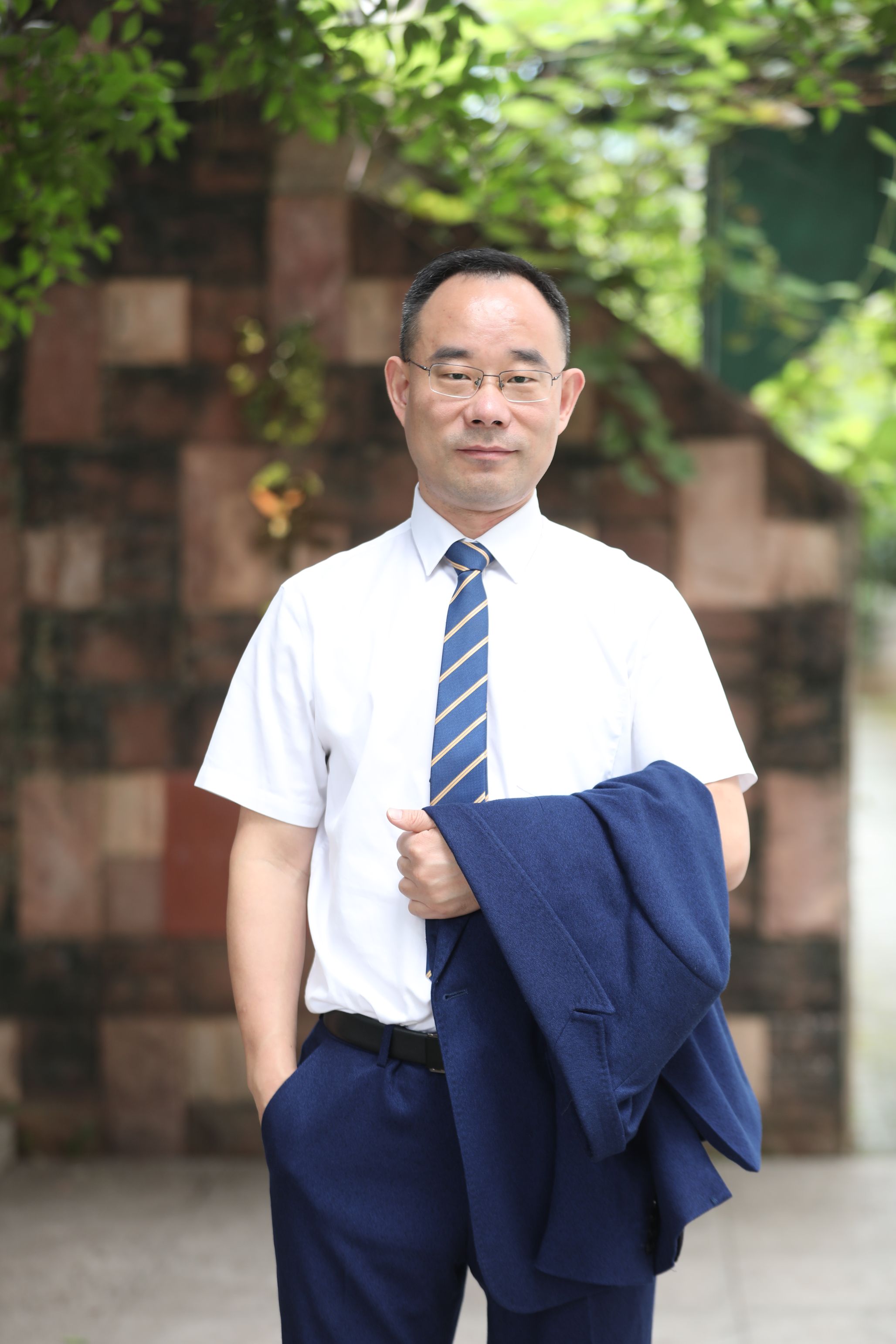
安徽池州人,1982年生,武漢大學(xué)教授,博士生導(dǎo)師,智慧水利系主任,國(guó)家杰出青年基金獲得者,全國(guó)優(yōu)秀博士論文獲得者、首批國(guó)家高層次人才青年項(xiàng)目獲得者、優(yōu)秀青年基金獲得者、霍英東青年教師獎(jiǎng)獲得者。
電子郵箱:liangshs@whu.edu.cn;期待對(duì)人工智能和水利工程交叉學(xué)科感興趣的學(xué)生和老師加入團(tuán)隊(duì)!
1999年至2003年于武漢大學(xué)進(jìn)行本科學(xué)習(xí),2003年至2009年于武漢大學(xué)攻讀博士學(xué)位,其中2007~2009年在獲留學(xué)基金委資助于美國(guó)南加州大學(xué)學(xué)習(xí);2009年至2010年于南加州大學(xué)進(jìn)行博士后研究,2010年破格晉升副教授,2012年破格晉升教授。2016-2017于英國(guó)愛(ài)丁堡大學(xué)合作研究。
地理信息系統(tǒng)(本科生)
人工智能與智慧水利(研究生)
智慧水管理(研究生)
主要從事水利工程與人工智能交叉學(xué)科研究,重點(diǎn)研究水利感知、認(rèn)知和決策智能的基礎(chǔ)理論,水利機(jī)器視覺(jué)和“地空天”立體感知技術(shù),大數(shù)據(jù)-物理機(jī)制混合建模,深度過(guò)程學(xué)習(xí);研發(fā)了自主知識(shí)產(chǎn)權(quán)的智慧水利系統(tǒng)“珈禾”,包括現(xiàn)實(shí)感知、大腦中樞、行為決策和數(shù)字孿生四部分,廣泛應(yīng)用于灌區(qū)水資源管理和工程調(diào)度、湖泊生態(tài)環(huán)境智能運(yùn)維、農(nóng)業(yè)水肥精準(zhǔn)管理和污染防控等多個(gè)領(lǐng)域。
主持30余項(xiàng)國(guó)家自然科學(xué)基金項(xiàng)目等課題。曾獲教育部自然科學(xué)二等獎(jiǎng)、教育部科技進(jìn)步一等獎(jiǎng)。發(fā)表學(xué)術(shù)論文160余篇,其中SCI論文110余篇。授權(quán)發(fā)明專利和軟著30余項(xiàng)。
代表性論文(*通訊作者):
1. Leilei He, Liangsheng Shi*, Wenxiang Song, Jiawen Shen, Lijun Wang, Xiaolong Hu, Yuanyuan Zha. Synergizing Intuitive Physics and Big Data in Deep Learning: Can We Obtain Process Insights While Maintaining State-of-the-Art Hydrological Prediction Capability? Water Resources Research, 2024. (提出了物理-大數(shù)據(jù)聯(lián)合驅(qū)動(dòng)的通用深度過(guò)程學(xué)習(xí)技術(shù))
2. Wenxiang Song, Shijie Jiang, Gustau Camps-Valls, Mathew Williams, Lu Zhang, Markus Reichstein, Harry Vereecken, Leilei He, Xiaolong Hu, Liangsheng Shi*. Towards data-driven discovery of governing equations in geosciences. Communications Earth & Environment, 2024. (綜述了地球科學(xué)中數(shù)據(jù)驅(qū)動(dòng)的方程發(fā)現(xiàn))
3. Yanling Wang,Liangsheng Shi*, Xiaolong Hu, Wenxiang Song, Lijun Wang. Multiphysics-informed neural networks for coupled soil hydrothermal modeling. Water Resources Research, 2023.(提出了一種復(fù)雜過(guò)程的物理信息神經(jīng)網(wǎng)絡(luò))
4. Zhengkun Zhou, Liangsheng Shi*, Yuanyuan Zha, et al. Densely connected squeeze-and-excitation convolutional encoder-decoder networks for identifying preferential channels in highly heterogeneous porous media. Water Resources Research, 2022.(以視覺(jué)的方式來(lái)研究巖石優(yōu)先流通道)
5. Wenxiang Song, Liangsheng Shi*, Lijun Wang, Yanling Wang, Xiaolong Hu. Data-driven discovery of soil moisture flow governing equation: a sparse regression framework. Water Resources Research, 2022.(從數(shù)據(jù)中發(fā)掘水動(dòng)力學(xué)方程)
6. Xiaolong Hu, Liangsheng Shi*, Lin Lin, Vincenzo Magliulo. Improving surface roughness lengths estimation using machine learning algorithms. Agricultural and Forest Meteorology, 2020.(利用機(jī)器學(xué)習(xí)方法提高蒸散發(fā)估計(jì)精度)
7. Qi Yang, Liangsheng Shi*, Jingye Han, Jin Yu, Kai Huang. A near real-time deep learning approach for detecting rice phenology based on UAV images. Agricultural and Forest Meteorology, 2020.(開發(fā)了近實(shí)時(shí)深度學(xué)習(xí)方法,從無(wú)人機(jī)圖像中診斷作物生理特征)
8. Xiaolong Hu, Liangsheng Shi*, Lin Lin, Yuanyuan Zha. Nonlinear boundaries of land surface temperature-vegetation index space to estimate water deficit index and evaporation fraction. Agricultural and Forest Meteorology, 2019.(發(fā)現(xiàn)了地表溫度-植被指數(shù)空間的非線性邊界,精準(zhǔn)評(píng)估區(qū)域干旱)
9. Xiaolong Hu, Liangsheng Shi*, Lin Lin, Baozhong Zhang, Yuanyuan Zha. Optical-based and thermal-based surface conductance and actual evapotranspiration estimation, an evaluation study in the North China Plain. Agricultural and Forest Meteorology, 263, 449-464, 2018.(如何更好地利用光學(xué)和熱紅外數(shù)據(jù)估計(jì)蒸散發(fā))
10. Yuanyuan Zha, Tian-Chyi J. Yeh, Walter Illman, Wenzhi Zeng, Yonggen Zhang, Fangqiang Sun,Liangsheng Shi*. A Reduced-Order Successive Linear Estimator for Geostatistical Inversion and Its Application in Hydraulic Tomography. Water Resources Research. 2018.(大型地下水問(wèn)題的水力層析技術(shù))
11. 史良勝*, 查元源, 胡小龍, 楊琦.智慧灌區(qū)的架構(gòu)、理論和方法之初探.水利學(xué)報(bào), 2020, 51(10): 1212-1222.(下一代灌區(qū)的理論和技術(shù)體系)
地址:武漢市武昌區(qū)東湖南路8號(hào)電話:027-68772215學(xué)院郵箱:sdxy@whu.edu.cn
Copyright ? 武漢大學(xué)水利水電學(xué)院
